Wednesday 21 August 2013
THE KREMLIN PROJECT… WHEN CRIMINALS BE INVITED TO BE ELECTED.
“Anyone is welcomed with open arms!” How the Kremlin has created a political martyr? No one in Russia was surprised when Alexei Navalny will now be able to contest Moscow’s mayoral election in September. The charges relate to the time, back in 2009, when Navalny was employed by Nikita Belykh, the governor of Kirov, a city in the middle of Russia’s vast forest belt, to help develop the region’s lumber industry. Who is Alexei Navalny? Navalny is of Ukrainian descent. In 2000, Navalny joined the Russian United Democratic Party "Yabloko", where he was a member of the Federal Political Council of the party. In 2002, he was elected to the regional council of the Moscow branch of Yabloko. Nikita Belykh the ex-leader of the Union of Right Forces, who has officially taken the post of Governor of the Kirov Region on December 8, 2008. Nikita Belykh declared before that he is not going to change his ideological views, but if he is approved for the post of Governor, he will leave his political career. “It is not a matter of political work. It is a matter of a region which is in a difficult situation, and needs smart management”, he stated. In September 2008 Belykh announced that he has resigned from his position and left the Union of Rightist Forces in connection with its likely upcoming merger with a couple of pro-Kremlin parties.
But soon the governor was accusing Navalny of selling it off at absurdly low prices and profiting from the deal. Navalny helped set up a company to buy the lumber and sell it on to 100 or so companies. Alexei Navalny fled to the US, studied at Yale for a while, and then returned to Russia, hoping the fuss had blown over. It hadn’t. But Alexei Navalny was NOT forgotten! The purchases he had made in good faith where twisted to look like theft the same “crazy blueprint” used to keep the oil tycoon Mikhail Khodorkovsky in prison – and last month a court in Kirov sentenced him to five years in jail. So what is about money? "Alexei Navalny has never hidden that former the Putin's opponent Boris Berezovsky gives him money for the struggle with Putin". But to universal astonishment, 24 hours after being hauled off in handcuffs, Navalny was set free pending appeal; Navalny will now be able to contest Moscow’s mayoral election in September 2013. Prosecutors say that detention before appeal is prohibited in the case of business crime, but they’ve never shown the slightest respect for the law before. No, President Putin is clearly worried that without Alexei Navalny, the mayoral election will look bogus; everyone knows the other opposition candidates are puppets.
But there’s no risk of Alexei Navalny winning – the incumbent Sergei Sobyanin is polling over 50 per cent – Navalny is barely in double figures, so after the vote he can safely be jailed. But it’s still risky: if Navalny gets more than 10 per cent it will reinforce his status as a political prisoner. “Any way you look at it, the Kremlin has backed itself into a corner.” With his movie-star looks, Alexei Navalny is most appealing of Putin’s opponents. He’s prepared to go to jail for his ambitions to be next Presidential election in Russia. Navalny also shows a determination to win power. Alexei Navalny is trade about Moscow being swamped with Muslim immigrants has supporters, but it’s clearly a calculated pitch for the nationalist vote: the liberals alone will never get him elected. This is now Russia’s leaders emerge, by standing up to officialdom. Navalny could one day prove just as “intransigent and inconsitive to other people opinions “as his persecutors. Outspoken Putin opponents join forces in test run for presidential challenge. (Source: THE WEEK)
Russian most opposition politician Alexei Navalny who sentenced in July 2013 for stealing $500,000. In comparison this matter after all now Navalny criticize the Kremlin officials for “archaic principles” of the management. It's ridiculous! Navalny's tone of his characterizes self as an inexperienced politician. Aleksei Navalny has been called the best hope for liberalization in Russia. Alexei Navalny has at various times called for deporting illegal immigrants and introducing a visa regime for the countries of Central Asia. Russian activists stand firm against Putin... only psychopaths always screaming “anyone but not Putin"! Some oligarchs especially Mikhail Prokhorov stands behind Navalny. It's crunch time "if you have enough of money you can to be the leader"! Prokhorov at a Christmas party for the Russian nouveau riche at the French Alpine resort of Courchevel in January 2007, he was arrested on suspicion of arranging prostitutes for his guests, according th the Mikhail Prokhorov’s Wikipedia page.
Alexei Navalny has recruited the husband of one of the imprisoned Pussy Riot member to help him to win the Moscow mayoral election. Navalny is running for office in what he hopes will be rehearsal for a presidential challenge. His campaign has breathed fresh life into Russia’s moribund electoral politics. Russian prosecutors accused Alexei Navalny on Monday of illegally receiving foreign funding for his campaign to oust an ally of President Vladimir Putin as Moscow mayor in an election next month. Some analysts say reformers like Alexei Navalny is a threat to Russia's politics.
Navalny a Racist? Engelina Tareyeva, who worked with Navalny when he was a member of the liberal Yabloko party before he was expelled in 2007, has accused him of routinely using racial slurs and basing his relations with people on their ethnicity. "I consider Aleksei Navalny the most dangerous man in Russia," Tareyeva has written. "You don't have to be a genius to understand that the most horrific thing that could happen in our country would be the nationalists coming to power." Navalny has flatly rejected Tareyeva's charges. Moreover, Navalny has rejected the widespread notion that discussing issues important to ethnic Russians will necessarily lead to neo-Nazism. In an interview with RFE/RL in January, Navalny laid out the main points of the so-called nationalist agenda, including combating illegal immigration and ethnically based organized-crime groups; protecting ethnic Russians abroad; and bringing order to the North Caucasus, which he has called a de facto lawless "off-shore zone."
With opinion polls giving Navalny up to 15 percent support, compared to Sobyanin's 75 percent, the white-haired Kremlin ally is strong favorite to win. But Navalny, an anti-corruption campaigner who has caught the mood of the urban youth, believes he might have a chance of victory if Sobyanin fails to secure a simple majority in the first round. The funding allegations were made by the nationalist Vladimir Zhirinovsky, leader of the Liberal Democratic party, which often backs Putin's policies. Checks have confirmed information about foreign funding of A. Navalny's election campaign," the Prosecutor General's office said in a statement, adding that more than 300 foreign individuals or legal entities had contributed to his funding. David Satter, advisor to Radio Liberty and fellow of the Hudson Institute and John Hopkins University, writes for CNN that Russia is playing a cat and mouse game with anti-corruption campaigner Alexei Navalny. Satter writes that in his blog, Navalny provided detailed reports on corruption in state-controlled companies, including the theft of $4 billion from the state-owned pipeline company Transneft.
Political scientist Sergey Mikheyev: "Refusal of debate – manifestation of weakness of Navalny" . Alexey Navalny refused further participation in debate of candidates in Mayors of Moscow. Before it sharply criticized the acting mayor that that doesn't participate in televised debates. Political scientist Sergey Mikheyev makes comments. – I think that the main cause of failure from debate that Navalny is simply weak in the Moscow city subject. It builds political career on the general oppositional slogans of emotional character, in every possible way abusing the power. He doesn’t own concrete subjects of management of the megalopolis, it is obvious. Elections of the Mayor of Moscow are more necessary to it for his political promotion. I am far from thought that Navalny suddenly decided to deal with the Moscow city problems and knows recipes of their decision. It is very improbable. He doesn’t know the Moscow problems and doesn’t understand them. (Source: RUfacts)
Police use chainsaw to storm flat and seize anti-Kremlin activists. Police broke into a Moscow flat and seized allegedly illegal campaign materials supporting the leading opposition candidate Alexei Navalny, ahead of his bid for the city’s mayorality. After several hours four people arrested to be pro-Navalny activists. Navalny called for an investigation into whether Sobyanin and his daughter, Anna, were involved in corruption in connection with a $3 million flat and a furniture business in St Petersburg. Then on Tuesday [15.8.2013] evening a police team turned up at the central Moscow flat of Vasily Drovetsky, a supporter of Navalny’s campaign. According to Interior ministry officials the occupants refused to answer the door and police broke in after smoke appeared from one of the windows. Inside they found about two tonnes of campaign publications, more than Navalny has officially declared; a source at the Moscow Central Electoral Commission told the RIA Novosti news agency.
A poll this week by the All-Russia Centre for the Study of Public Opinion put Sobyanin in front with about 53 per cent of public support, trailed by Navalny with 8 per cent. A run off will happen Sergei Sobyanin fails to secure more than half of the vote at the first time of asking. Levada-Centre revealed that 40 per cent of Muscovites expected the mayoral campaign to be “dirty, featuring slander, falsification, [and] abuse of administrative resources.” The show must go on… Thank to both of you Vladimir Putin and Alexei Navalny!” (Radio Free Europe/Radio Liberty)
Mr Navalny’s politically motivated conviction is still in place, but he has been released, pending an appeal, and allowed, at least for now, to run in the mayoral election in Moscow. The harsh sentence gave him the dignity of a martyr. His miraculous release 24 hours later gave him the laurels of a hero. There is no doubt that in both cases the instructions came directly from Vladimir Putin, Russia’s president. Not even the savviest campaign manager could have done as much for him.
Mr Navalny seemed a suitable opponent. He was recognised by the opposition as a figure of standing, but lacked the qualities for a largely managerial job. Thus he stood no chance of beating the popular Mr Sobyanin. Mr Navalny’s defeat was supposed to demoralise the opposition and reduce his political prestige in jail. Navalny's release makes the situation less predictable. Mr Navalny’s supporters say the pending sentence forces the mayoral election into a vote against political persecution. If Mr Navalny does well putting him back in jail may be harder politically. The election campaign has also boosted the political profile of Mr Sobyanin beyond what many siloviki may consider comfortable. A solid victory in a relatively straight election would turn him into a powerful force. This could lead to a deeper split within the elite ahead of the 2018 presidential elections. Given Mr Putin’s grip over the Kremlin, the fact that politics are emerging first at the municipal and regional level makes sense. The decisive battles in the late 1980s were fought not within the Kremlin, but between the Kremlin and the republics. By trying to avoid the scenario that led to the end of Soviet rule, Mr Putin seems to have brought it a step closer. (Source: THE ECONOMIST).
EDITORIAL BLOGGER

Friday 1 June 2012
CLIMATE CHANGE AT ALL TIME BUT GLOBAL WARMING THREATENS THE LIFE.


Sunday 5 June 2011
PREVENTION OF HOMELESSNESS ON ADULTS ARE CHRONICALLY EXCLUDED BUT THE ACE PROJECT THAT WILL CHANGE YOUR LIFE.
The UN's commitment to change aims to improve the world's cities and so change people's lives. The top 25 cities in the world account for more than half of the world’s wealth, according to a UN report.

Manager Garry Bryson of the Cyrenians were in attendance to make a slide presentation on the ACE Project there were twelve pilots across England, each with different approaches. Head of Strategic Housing, Regeneration Directorate wish to submit on a new initiative (ACE) to address the needs of Adults Facing Chronic Exclusion and providing a progress report on the current trends and management of homelessness in Newcastle upon Tyne. The ACE team won the Housing Heroes Support Team of the Year Award.
Last year, the Tyneside Cyrenians marked its 40th anniversary with a number of celebratory events and was named UK charity of the year. The Cyrenians were in the list of best companies to work for in 2010. Based on the feedback from staff, the review has shown effective communication between staff, the organization and throughout the structure of the management.

The head of strategic housing of the regeneration directorate want to submit a new initiative to address the needs of adults facing chronic exclusion and providing a progress report on the current trends and management of homelessness in Newcastle upon Tyne. The ACE team won the Housing Heroes Support Team of the Year Award.
Now homeless adults who have problems like low self-esteem, depression, alcoholism or drug dependency, have the chance to take part in creative activities with professional artistes.
A new project, Creative Progression has invited the homeless to meet workers from the theatres of the North East to learn acting, drama activities, training and other opportunities accessible in Newcastle upon Tyne. The project has been organised by the Tyneside Cyrenians in conjunction with Newcastle City Council, Crisis, Helix Arts and the Arts Council of Great Britain.
With the support of the John Lewis Partnership, the Cyrenians opened their first charity shop in March 2010. Income from the sales will cover operating costs with any profit going towards the work of the charity.
The UK's first coalition government vow to reduce the country's deficit as quickly as possible over the next five years will have an impact on the Cyrenian's work.
The Ron Eager house operates at the sharp end, providing 'drop' support for the homeless close to Newcastle city centre. A range of home comforts, often taken for granted, such as food, warmth, clothing, washing facilities and companionship are available. And it operates an 'open door' policy where anyone over the age of 16 can access the centre.
The Drug Interventions Programme (DIP) works to reduce the damage done to communities as a result of drug -related crime and anti-social behaviour by getting users into treatment and keeping them there.
By Victor Yanulevich

Manager Garry Bryson of the Cyrenians were in attendance to make a slide presentation on the ACE Project there were twelve pilots across England, each with different approaches. Head of Strategic Housing, Regeneration Directorate wish to submit on a new initiative (ACE) to address the needs of Adults Facing Chronic Exclusion and providing a progress report on the current trends and management of homelessness in Newcastle upon Tyne. The ACE team won the Housing Heroes Support Team of the Year Award.
Last year, the Tyneside Cyrenians marked its 40th anniversary with a number of celebratory events and was named UK charity of the year. The Cyrenians were in the list of best companies to work for in 2010. Based on the feedback from staff, the review has shown effective communication between staff, the organization and throughout the structure of the management.

The head of strategic housing of the regeneration directorate want to submit a new initiative to address the needs of adults facing chronic exclusion and providing a progress report on the current trends and management of homelessness in Newcastle upon Tyne. The ACE team won the Housing Heroes Support Team of the Year Award.
Now homeless adults who have problems like low self-esteem, depression, alcoholism or drug dependency, have the chance to take part in creative activities with professional artistes.
A new project, Creative Progression has invited the homeless to meet workers from the theatres of the North East to learn acting, drama activities, training and other opportunities accessible in Newcastle upon Tyne. The project has been organised by the Tyneside Cyrenians in conjunction with Newcastle City Council, Crisis, Helix Arts and the Arts Council of Great Britain.
With the support of the John Lewis Partnership, the Cyrenians opened their first charity shop in March 2010. Income from the sales will cover operating costs with any profit going towards the work of the charity.
The UK's first coalition government vow to reduce the country's deficit as quickly as possible over the next five years will have an impact on the Cyrenian's work.
The Ron Eager house operates at the sharp end, providing 'drop' support for the homeless close to Newcastle city centre. A range of home comforts, often taken for granted, such as food, warmth, clothing, washing facilities and companionship are available. And it operates an 'open door' policy where anyone over the age of 16 can access the centre.
The Drug Interventions Programme (DIP) works to reduce the damage done to communities as a result of drug -related crime and anti-social behaviour by getting users into treatment and keeping them there.
By Victor Yanulevich
Wednesday 4 May 2011
ECONOMY GROWS LED UP IN BRITAIN’S REGIONS.
GATESHEAD, as part of the fast developing North East region, is preparing itself for a bid for city status. From the coal which powered the country, to the Angel which inspires it, Gateshead is advertising its successes. The council have been preparing their case, as one of the thirteen candidates for city status due to be awarded as part of the Queen's Diamond Jubilee celebration. The Deputy Prime Minister, Nick Clegg, will make the decision as soon as all the final documents have been received.
Gateshead council has at last approved a plan, subordinate to legal agreement, for the development of Trinity Square. Millions of pounds will be invested in the regeneration of Gateshead town centre, as well as an agreement to finance improvements to more than 1,800 houses; all as part of an £18.5 million development for the borough.

A year ago on March 5, 2010 the Labour party announced that Ian Mearns had been selected as their prospective parliamentary candidate for the Gateshead. Mr. Mearns was chosen after a postal ballot of Labour party members in the Gateshead constituency and after his selection said "I really felt it was important that the Constituency Labour Party had the chance to select a local person who cared passionately about the place and had a fundamental understanding of the needs and aspirations of local people. I give a promise and a commitment of tireless work for Gateshead and for everyone that lives here". He has encouraged his constituents to take advantage of free health check-ups, and supports the campaign of the British Lung Foundation to ban smoking in cars carrying children.
Ian Mearns MP for Gateshead and his professional team, Cllr Angela Douglas (Housing and Regeneration) and Cllr Martin Gannon (Environment), want to provide an infrastructure for Gateshead ensuring greater successes in encouraging residents. They intend to keep operational costs low without jeopardizing present standards or the environment.
The communities of Gateshead have benefitted from local residents who have made massive contributions to their area and have recently been honoured at a ceremony given by the borough council, which recognizes the hard work and dedication of those who go out of their way to make Gateshead a good place to live, work and visit. An award made even more special by the winners having been chosen by their own communities.
The risk of being a victim of crime in Gateshead has fallen to its lowest ever level, making it one of the safest places to live in Tyne and Wear. There were reductions in almost all the main categories of crime, registering fewer than 62 crimes per 1.000 populations within the last year, according to the council's source. On a regular basis, residents in Sunniside and Whickham and other surrounding areas of Gateshead are invited to online meetings with Northumbria Police.
Gateshead authority will be developing a 7.5 hectare site over the next few years to offer some of the most advanced housing in the borough. It will include safe public areas, hi-speed internet communication and places for the relaxation and leisure for the residents. But there are still a few problems to be dealt with, such as the roads. Accommodating strategic highway infrastructure has taken precedence over the wider needs of Gateshead town centre.
The area produces more than 110,000 tonnes of household waste every year, enough to leave the town waist deep in rubbish and equivalent to the combined weight of 550 Angels of the North. Currently, 75% of this waste goes to landfill. On average, each person in Britain throws away their own body weight in rubbish every seven weeks. The average Gateshead household produces about 1 tonne of waste per year, the same weight as a family car or around 509kg per person. The community needs as much involvement as possible from the people to reduce waste.
By Victor Yanulevich
Gateshead council has at last approved a plan, subordinate to legal agreement, for the development of Trinity Square. Millions of pounds will be invested in the regeneration of Gateshead town centre, as well as an agreement to finance improvements to more than 1,800 houses; all as part of an £18.5 million development for the borough.

A year ago on March 5, 2010 the Labour party announced that Ian Mearns had been selected as their prospective parliamentary candidate for the Gateshead. Mr. Mearns was chosen after a postal ballot of Labour party members in the Gateshead constituency and after his selection said "I really felt it was important that the Constituency Labour Party had the chance to select a local person who cared passionately about the place and had a fundamental understanding of the needs and aspirations of local people. I give a promise and a commitment of tireless work for Gateshead and for everyone that lives here". He has encouraged his constituents to take advantage of free health check-ups, and supports the campaign of the British Lung Foundation to ban smoking in cars carrying children.
Ian Mearns MP for Gateshead and his professional team, Cllr Angela Douglas (Housing and Regeneration) and Cllr Martin Gannon (Environment), want to provide an infrastructure for Gateshead ensuring greater successes in encouraging residents. They intend to keep operational costs low without jeopardizing present standards or the environment.
The communities of Gateshead have benefitted from local residents who have made massive contributions to their area and have recently been honoured at a ceremony given by the borough council, which recognizes the hard work and dedication of those who go out of their way to make Gateshead a good place to live, work and visit. An award made even more special by the winners having been chosen by their own communities.
The risk of being a victim of crime in Gateshead has fallen to its lowest ever level, making it one of the safest places to live in Tyne and Wear. There were reductions in almost all the main categories of crime, registering fewer than 62 crimes per 1.000 populations within the last year, according to the council's source. On a regular basis, residents in Sunniside and Whickham and other surrounding areas of Gateshead are invited to online meetings with Northumbria Police.
Gateshead authority will be developing a 7.5 hectare site over the next few years to offer some of the most advanced housing in the borough. It will include safe public areas, hi-speed internet communication and places for the relaxation and leisure for the residents. But there are still a few problems to be dealt with, such as the roads. Accommodating strategic highway infrastructure has taken precedence over the wider needs of Gateshead town centre.
The area produces more than 110,000 tonnes of household waste every year, enough to leave the town waist deep in rubbish and equivalent to the combined weight of 550 Angels of the North. Currently, 75% of this waste goes to landfill. On average, each person in Britain throws away their own body weight in rubbish every seven weeks. The average Gateshead household produces about 1 tonne of waste per year, the same weight as a family car or around 509kg per person. The community needs as much involvement as possible from the people to reduce waste.
By Victor Yanulevich
Tuesday 26 April 2011
CALAMITY’S LEGACY OF CHERNOBYL CONTAINING A RUNAWAY NICLEAR
The Fukushima nuclear accident has served as a reminder to us of the similar disaster at Chernobyl. The official estimation of the gravity of the Fukushima accident has been raised from level 5 to level 7, giving it equal severity as the Chernobyl disaster. The Japanese nuclear agency has reported that the radiation release could finally exceed the radiation release from the Chernobyl reactor.
Reactor No.4 at Chernobyl exploded on the 26th April, 1986. It caused a cloud of radiation that covered most of the northern hemisphere, carrying 5.2 million terabequerels of radioactive substances. On the first day of the reactor's failure, the radiation dose was estimated by experts at 20 million millisieverts.

Designed in the Soviet Union in 1960, the Chernobyl Nuclear Power Plant grew to become the biggest atomic power station. As a result of the explosion, an area of approximately 30 km. has been declared unfit for human habitation. The costs for the resettlement of the inhabitants from the affected area and the payments for medical treatment have been estimated at hundreds of billions of dollars.
The workers that participated in the shut down of the reactor and the decontamination of the immediate area were promised generous benefits for their highly dangerous work. The Chernobyl Union of Ukraine has estimated and published a list of victims of the disaster, amounting to almost 734,000 people. Livestock was also affected, and radiation traces have been found as far away as Scandinavia and Great Britain.
On the eve of the 25th anniversary of the disaster; Kiev, the capital of Ukraine, has hosted mass protests. Amongst these were 600,000 people who were the so-called "liquidators" from all over the former Soviet Union, sent to Chernobyl to shut down the reactor and clean up the area.
Approximately 2,000 people were involved in the shutting down of the Chernobyl reactor, previously regarded as the worst nuclear catastrophe in the world. The Soviet authorities were accused by the western media of concealment, deliberately blocking the free distribution of information on the accident.
Some of these protesters have seen their monthly pensions reduced from the equivalent of 200$ to 150$. This is just sufficient to buy the necessary medicines and food. The Ukrainian government has declared that it hasn't the money to pay the original sums promised to the tens of thousands involved in the aftermath of the accident. In Ukraine, about 4 million people have been affected by radiation, and more than 150.000 have had to be resettled. Approximately 5 million people have been affected by radiation in Ukraine, Belarus and Russia.

Those who were caught in the fallout from Chernobyl have really suffered, and are now having their income from the certificates of liquidators cut. However, Alla Pugacheva, the Soviet and Russian singer and composer, visited the Chernobyl district once, avoiding the vicinity of the reactor, and was given a certificate of the liquidator and the financial support the genuine victims had.
Mikhail Gorbachev, the former president of the Soviet Union during the Chernobyl crisis, now heads the International Green Cross. He has used the 25th anniversary of the disaster to declare that the nuclear power industry is still not ready to deal with accidents or to work against climate change. The Soviet Authorities were afraid of panic, so did not cancel the mass demonstrations of May 1st. 1986. an action they later regretted, but by May 1st there was still no clear picture of what had happened. The facts were probably being concealed by officials afraid of being held responsible for any negative outcome by their superiors. The situation gradually became clearer through the scientists, engineers, military, helicopter pilots, miners and the personnel of the Chernobyl station.
The shell that Soviet workers hastily erected to enclose the reactor has since cracked, releasing traces of radiation, and an international effort to build and place a new containment structure may soon begin construction. The $2 billion - plus shield will include systems that remove heat from the damaged reactor and sensors that measure the new structure's integrity. The design is finished, but the project remains under funded. European Union nations so far have promised to cover half the cost: Russia, which controlled the Ukraine as part of the Soviet Union at the time of the disaster, has pledged just 1 percent.
By Victor Yanulevich
Reactor No.4 at Chernobyl exploded on the 26th April, 1986. It caused a cloud of radiation that covered most of the northern hemisphere, carrying 5.2 million terabequerels of radioactive substances. On the first day of the reactor's failure, the radiation dose was estimated by experts at 20 million millisieverts.

Designed in the Soviet Union in 1960, the Chernobyl Nuclear Power Plant grew to become the biggest atomic power station. As a result of the explosion, an area of approximately 30 km. has been declared unfit for human habitation. The costs for the resettlement of the inhabitants from the affected area and the payments for medical treatment have been estimated at hundreds of billions of dollars.
The workers that participated in the shut down of the reactor and the decontamination of the immediate area were promised generous benefits for their highly dangerous work. The Chernobyl Union of Ukraine has estimated and published a list of victims of the disaster, amounting to almost 734,000 people. Livestock was also affected, and radiation traces have been found as far away as Scandinavia and Great Britain.
On the eve of the 25th anniversary of the disaster; Kiev, the capital of Ukraine, has hosted mass protests. Amongst these were 600,000 people who were the so-called "liquidators" from all over the former Soviet Union, sent to Chernobyl to shut down the reactor and clean up the area.
Approximately 2,000 people were involved in the shutting down of the Chernobyl reactor, previously regarded as the worst nuclear catastrophe in the world. The Soviet authorities were accused by the western media of concealment, deliberately blocking the free distribution of information on the accident.
Some of these protesters have seen their monthly pensions reduced from the equivalent of 200$ to 150$. This is just sufficient to buy the necessary medicines and food. The Ukrainian government has declared that it hasn't the money to pay the original sums promised to the tens of thousands involved in the aftermath of the accident. In Ukraine, about 4 million people have been affected by radiation, and more than 150.000 have had to be resettled. Approximately 5 million people have been affected by radiation in Ukraine, Belarus and Russia.
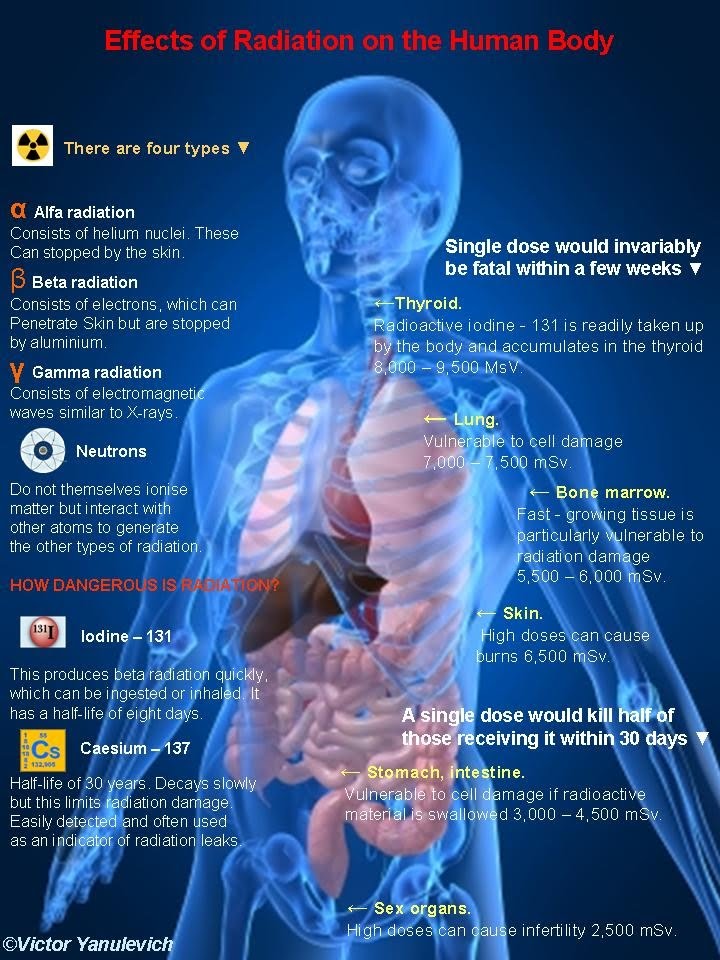
Those who were caught in the fallout from Chernobyl have really suffered, and are now having their income from the certificates of liquidators cut. However, Alla Pugacheva, the Soviet and Russian singer and composer, visited the Chernobyl district once, avoiding the vicinity of the reactor, and was given a certificate of the liquidator and the financial support the genuine victims had.
Mikhail Gorbachev, the former president of the Soviet Union during the Chernobyl crisis, now heads the International Green Cross. He has used the 25th anniversary of the disaster to declare that the nuclear power industry is still not ready to deal with accidents or to work against climate change. The Soviet Authorities were afraid of panic, so did not cancel the mass demonstrations of May 1st. 1986. an action they later regretted, but by May 1st there was still no clear picture of what had happened. The facts were probably being concealed by officials afraid of being held responsible for any negative outcome by their superiors. The situation gradually became clearer through the scientists, engineers, military, helicopter pilots, miners and the personnel of the Chernobyl station.
The shell that Soviet workers hastily erected to enclose the reactor has since cracked, releasing traces of radiation, and an international effort to build and place a new containment structure may soon begin construction. The $2 billion - plus shield will include systems that remove heat from the damaged reactor and sensors that measure the new structure's integrity. The design is finished, but the project remains under funded. European Union nations so far have promised to cover half the cost: Russia, which controlled the Ukraine as part of the Soviet Union at the time of the disaster, has pledged just 1 percent.
By Victor Yanulevich
Saturday 13 November 2010
RUSSIAN AUTHORITIES ALLOW THE LAKE BAIKAL POLLUTION

"The Lake Baikal rift system is a modern analogue for formation of ancient Atlantic-type continental margins. It tells us the first chapter in the story of how continents separate and ultimately develop into ocean basins like the Atlantic Ocean."
Dr. Deborah Hutchinson
U.S. Geological Survey
"Lake Baikal is a unique, nearly pristine environment for the study of global change. Nowhere else in the world can we go to study so long a record of such an important, but little known, part of the global climate system."
Dr. Steve Colman
U.S. Geological Survey
THE MASS MEDIA have been reported that the unique ecosystem of Lake Baikal is under threat of destruction. The demands from scientists, ecological experts and environmental activists for the closure of production at the Baikal Pulp and Paper Mill, the main culprit for the pollution of the lake, have been ignored by the Russian authorities.
On the 26th October 2010, Prime Minister Vladimir Putin signed the order for the Baikal Pulp and Paper Mill to change to a closed-loop water circulation system, to end the pollution of Lake Baikal. This was tried before in September 2008, but the production of unbleached cellulose was stopped the next month and the mill closed as the system made production unprofitable.
The Baikal Pulp and Paper Mill, until the Autumn of 2008, was the main producer of pollution in the lake. The annual amounts of pollutants in the form of sewage were nearly 100,000 cubic metres. The volume of the annual emissions of atmospheric pollutants exceeded 30,000 tons. Production wastes contained significant concentrations of chlorines, phosphates, sulphates, nitrates, sulphur substances, phenols, heavy metals and other toxic substances.
The Baikal Pulp and Paper Mill was founded in 1966. From the start, the operation has changed its orientation from its strategic purpose to full industrialisation. The actions of the authorities led some to regard the factory and its purpose with irony and occasionally sarcasm.
Prime Minister Putin visited the mill in the summer of 2009. He has not said anything certain about the future of the mill, but has admitted the possibility of re-opening the plant. This will undoubtedly have a negative effect on the flora and fauna of the Baikal region.

There have been numerous protests by the inhabitants of the region demanding the closure of factories harmful to the environment. Approximately 2,000 people from the city of Baikalsk (population 15,000) work at the pulp and paper mill. As yet, the problem of unemployment has no answer, but the closure of the mill is a necessity understood by everyone. The serious effect on the ecosystem of Lake Baikal and its environs is one of the principle arguments of the opposition to this enterprise.
To draw attention to the serious environmental problems, the all-Russia movement "The Coalition for Baikal" was formed. This has the support of almost fifty non-governmental and ecological associations in Russia. The Coalition gave the Russian government an expert analysis of the projected federal target programme for the protection of the lake and the social and ecomonic development of the region. They specified a number of essential defects which, in the opinion of the ecologists will negate all the positive concepts contained in this very important document.
The proprietors of the Baikal Pulp and Paper Mill are the Federal Agency for State Property Management (Rosimushchestvo), 49%; and holding 51% is Oleg Deripaska. The media were informed at the beginning of 2010 that Mr Deripaska had offered to transfer 25.2% of his share holdings to the administration of the city of Baikalsk.
Lake Baikal is in the southern part of Eastern Siberia. It is the largest and deepest fresh water lake on the planet with a unique flora and fauna.

The network mass-media have reported that, on the 17th June 2010, Judge Vladimir Zajtsev of the Russian Supreme Court, after a few minutes deliberation, passed the governmental order of Russia of 13th January 2010. According to this document the Baikal Pulp and Paper Mill can dump industrial waste into Lake Bailkal. It is business as usual and confirms that the fate of the mill was decided in advance between Mr. Putin and Mr. Deripaska. But the case of the mill is not closed. The Russian Federal Antimonopoly Service was satisfied by the petition of the Cypriot company "Galibi Limited" for the purchase of 49.9% of the holdings of the Baikal Pulp and Paper Mill.
Friday 7 August 2009
NATIONAL DISASTER OF VAGRANT DOGS AND CATS IN RUSSIA.

Picture and text by Victor Yanulevich
An old woman has died from rabies, two months after having been bitten by a stray cat in 2007. It is the first fatal case in the Voronezh area in the last thirteen years, a journalist from ROSPOTREBNADZOR reported to RIA News.
In the town of Verkhnyaya Salda in the Sverdlovsk area, there has been an outbreak of dogs attacking people. For the month of July 2006, twelve people were bitten, and for the first six months more than one hundred people were attacked. The last being a three month old baby.
In Vladivostok, guard dogs attacked passers-by, and in Tomsk a man lost both legs after being savaged by four dogs on the evening of the 6th April 2006. In Chelyabinsk a six year old girl died of rabies after a dog bite. In the capital during 2004, twenty-seven thousand, three hundred and sixty-eight people were bitten by dogs, the Association of Veterinary Science in Moscow told the media in 2006.
During one week in September 2005 in Kazan, stray dogs killed three people. Four deaths have been reported in the Astrakhan area. The statistics of guard dogs attacking people are supplemented by attacks by rabid strays roaming the cities.
The Russian mass-media are constantly publishing stories of shoppers carrying bags of provisions being attacked by dog packs. These packs tend to pick out women, children and the elderly and other more vulnerable members of society. According to Dr. Boris Samoilov, editor-in-chief of the Red Book of Moscow, stray dogs have destroyed nearly all the wildlife in the capital and the situation is close to critical.
These stray dogs carry a variety of infections. Even a small bite can transmit rabies and mutilation, loss of limbs and even death can occur from infected animals. The dogs are cross-breeds. The result of domestic animals abandoned by their owners that have developed into feral animals with the cunning, aggression and pack instinct to survive in the city.
In the autumn of 2006, the Moscow City Duma (Moscow's parliament) presented a bill titled "The Maintenance of Pets in the City", which should provide a grading system for breeds of dog considered "dangerous to human life in Moscow". This would mean restrictions on breeds such as fight rottweilers and other dogs used mainly as guard dogs as they have become the most common dogs responsible for the frequent attacks on people.
The statistics quote that 80-90% of attacks on people are from guard dogs or strays. And the number of feral cats and dogs in the city grows steadily. According to the Department of Housing and Communal Services, a shelter with places for twenty-two thousand animals will be opened. There are plans to open twelve more such pounds. Five thousand strays are already in shelters.
Already there are upwards of twenty-five thousand stray animals roaming Moscow and every year the figure grows by about five thousand. If caught, these animals are sterilized. A moratorium was called on the shooting of strays in Moscow more than eight years ago, but the problem of the strays was still a concern. Deputies of Moscow City Council have been told that, over the past two years, the number of complaints regarding dog packs terrorizing streets and public areas has grown sharply.
In early summer 2005, state health officer Gennady Onishchenko, signed a bill "to strengthen legislation to restrict the spread of rabies in Russia". The document admitted that in certain regions in Russia, rabies had reached epidemic proportions during 2005.
The result of the government's ill-informed programme of sterilization has not justified itself. It is estimated that there are one hundred thousand stray dogs on the Moscow streets. The workload of the dog catchers has become simply intolerable.
Thousands of Muscovites have repeatedly contacted the authorities and the mayor of Moscow, Yury Luzhkov, with complaints about the cruel treatment of, and requests for help with, these animals. But if a reply was received it was usually a refusal or an official letter outlining the Department of City Wildlife (Department of Housing and Communal Services) "Humane Policy of Sterilization of Stray Animals". Nothing has been done.
In the Russian media, the Department of City Wildlife have conducted a "disinformation" campaign regarding the success of the sterilization programme and the presence in Moscow of normally functioning animal pounds.
In the capital alone, it is estimated that tens of millions of roubles of budgetary money is spent on the treatment of those who have been attacked by the animals. Approximately thirty-five million roubles are allocated from the Moscow budget to deal with the problem of strays, but the utilization of these means cannot be checked. The harm done to the community when so many people have been injured and killed by feral animals is measureless.
Video monitoring has also shown that the number of stray cats is as great as the number of stray dogs. They suffer from the usual injuries of feral living as well as being victims of human cruelty resulting in torture and death. In 2004, it was revealed in Moscow that the captured strays were killed rather than sterilized.
On the 6th April 2004, in the Moscow City Duma, the results of the Commission on Municipal Economy were subject to checks by the Control and Accounts Chamber of Moscow. The effective utilization of funds directed to the regulation and maintenance of strays, were to be considered.
As the press centre of the Moscow City Government has reported; the City Management Department, the Prefectures of the Eastern, Western and Southern Administrative Districts, the State Unitary Enterprise for the "catching of wild animals", the company Zoo Service Ltd., and the city's animal sanctuaries; have all come under the financial scrutiny of the auditors of the Control and Accounts Chamber of the Moscow government.
In June 2005, the All-Russia Centre for the Study of Public Opinion (VCIOM) (www.wciom.com) led the questioning of experts from the trustees of Moscow's stray cat population, regarding the position of these animals. The results showed that the main cause of death amongst the cats was attack from stray dogs.
Under the European Convention on the Protection of Animals wrote, few russian non government organizations in 2004 sent a letters to former President Vladimir Putin, former Chairman of the Government of Russia Michael Fradkov, Yury Luzhkov the Mayor of Moscow and the Commission of Human Rights: "the reduction of the number of neglected dogs and cats by their sterilization is not humane to animals and does not allow reduction of numbers. Thereby contradicting the purposes of the application and is one of the bases for cancelling the programme".
The European Convention on the Protection of Animals states; "If the state considers that the number of stray animals represents a problem it should take the legislative and/or administrative measures necessary to decrease their number in ways that will not cause pain or suffering".
Subscribe to:
Posts (Atom)